Rendering Tallow: Why Our Ancestors Used it for Cooking and Skin Care
- ashleycfrost1
- Aug 26, 2024
- 3 min read
If you’ve been exploring ways to make your kitchen and your skincare routine more wholesome and sustainable, you might have come across tallow. You might be wondering, “What exactly is tallow, and why should I consider using it?” Let me tell you more about the wonderful world of tallow and why it deserves a permanent spot in your home.
What is Tallow?
Tallow is a type of rendered fat from beef or lamb. It has been used in cooking and skincare for centuries, and with good reason.
Why Use Tallow for Cooking?
Rich Flavor and Texture: Tallow has a unique flavor and can add a rich, savory depth to your dishes. It’s particularly great for frying and roasting because it has a high smoke point.
Nutrient-Dense: It’s packed with fat-soluble vitamins like A, D, E, and K. These vitamins are better absorbed when consumed with fats.
Sustainable and Local: It’s a byproduct of meat processing. When sourced from grass-fed beef, it’s even better for you and the environment.
How to Render Tallow
Rendering tallow is surprisingly easy and a great way to connect with the traditional aspects of cooking. Here’s a simple step-by-step guide:
Source Your Beef Fat: You can ask your local butcher for beef fat (sometimes called suet). Grass-fed is preferable for the highest quality.
Cut Into Small Pieces: Chop the fat into small chunks to help it melt more evenly. Frozen fat is easier to cut.
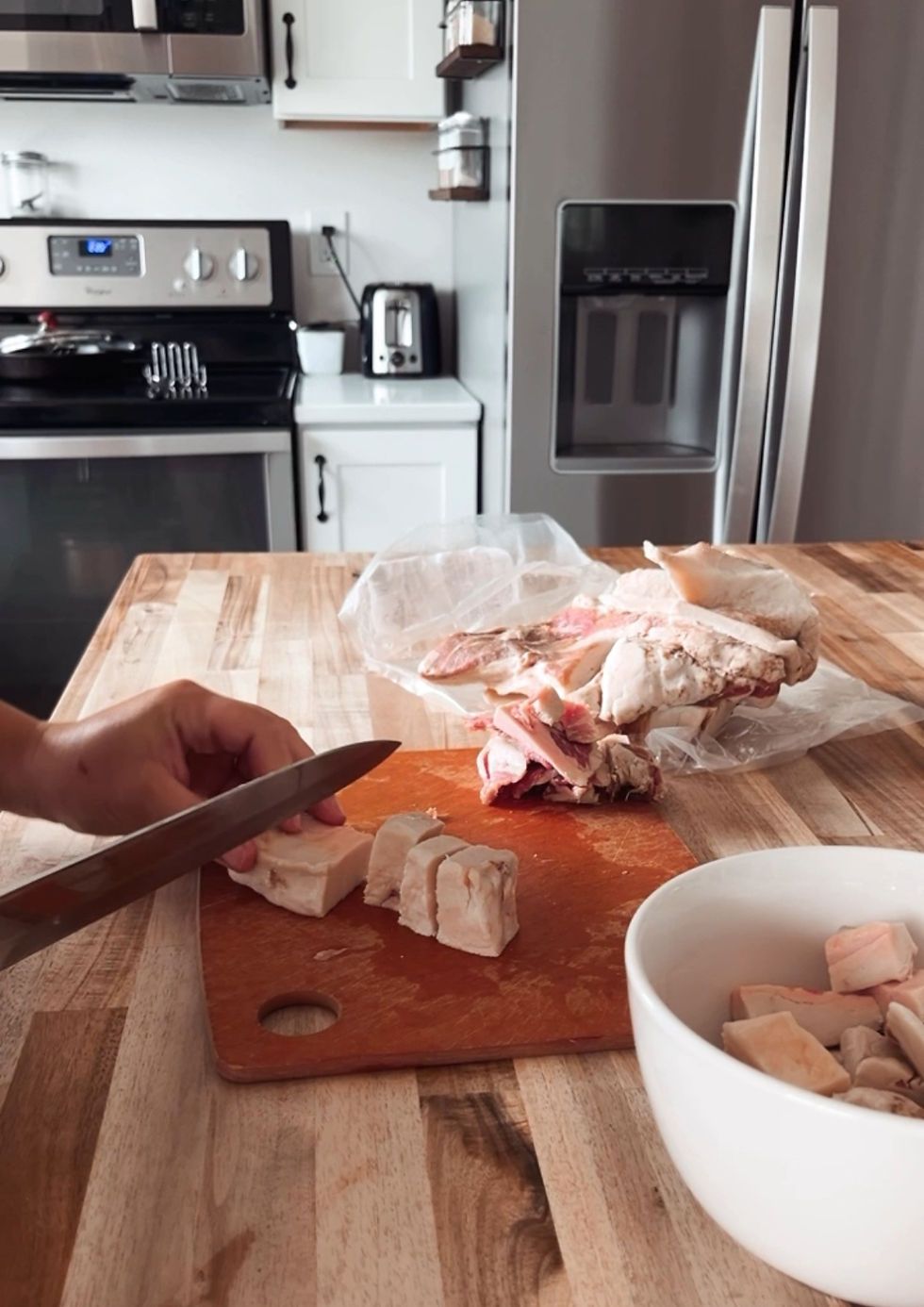
Heat Slowly: Place the fat in a large colander inside another large pot. The fat will slowly melt from the solid into the pot below. Be sure there is enough room for the liquid to gather without hitting the colander. Place into the oven at 220 degrees for 7-10 hours. I used 4 lbs of fat and it took almost 8 hours.

Strain and Store: Once the fat has melted and the solid bits have turned crispy, strain the liquid fat through a fine-mesh strainer or cheesecloth to remove impurities. Pour the liquid tallow into glass jars (click here for my glass storage set) and let it cool. Once solidified, it will have a creamy, white appearance.

Store Properly: Tallow can be stored in the refrigerator for several months or in the freezer for even longer.

Tallow for Skin Care
Tallow isn’t just for cooking—it’s also fantastic for your skin! Here’s why:
Natural Moisturizer: Tallow is incredibly nourishing and helps to moisturize and hydrate the skin. It’s packed with essential fatty acids and vitamins that can help to repair and protect the skin barrier.
Similar to Our Skin: The fatty acids in tallow are similar to those found in human skin, which means it can be more easily absorbed and utilized. This makes it an effective ingredient for reducing dryness and promoting a healthy complexion.
Healing Properties: Tallow has been used traditionally to treat various skin conditions. Its anti-inflammatory properties can help soothe irritated skin, and its vitamin A content supports cell regeneration, making it beneficial for acne-prone or aging skin.
Simple and Natural: When you use tallow in skincare, you’re opting for a product that’s free from synthetic chemicals and preservatives. It’s a pure, natural option that’s been used safely for generations.
Making Your Own Tallow Balm
If you’re interested in making your own skincare products, here’s a simple tallow balm recipe:
Ingredients:
1 cup rendered tallow
Optional: a few drops of essential oils (like lavender or frankincense) for added fragrance and benefits
Instructions:
Melt the tallow gently in a double boiler or over a very low heat.
If using essential oils, add them once the tallow is melted.
Pour the melted tallow into glass jars (click here for Amber Glass cosmetic jars)
Let it cool and solidify.

And that’s it! You now have a luxurious, homemade skincare balm that’s all-natural and incredibly effective.
Give tallow a try and see how this traditional fat can enhance your homesteading journey!
Happy Homesteading!


Comments